How to Nurture Leadership in Your Child with Practical Everyday Steps

Busy parents already juggling work, home life, and spiritual or natural-health values often carry a quiet, additional worry: kids need guidance, but the days already feel maxed out. Between sibling conflict, big emotions, screens, and the pressure to “get it right,” parenting challenges can leave parents seeking leadership guidance wondering whether leadership is something kids are born with or something families somehow teach. Children’s early leadership development doesn’t start with perfect behavior or polished confidence, it starts with emotional connection in parenting and the small moments that shape how a child treats themselves and others. With steady support, nurturing leadership skills in children can become a natural part of daily life.
What Leadership Skills Look Like in Kids
Leadership in children is not about being the loudest or the “best.” It’s a set of learnable skills: confidence to try, empathy to notice others, communication to speak and listen, integrity to do what’s right, and initiative to help without being asked. These traits show up in everyday choices, not just in awards or performance. This matters because early nurture shapes a child’s whole person, including their conscience and sense of purpose. Spiritual values fit naturally here, since basic concepts, such as God is real and lovingly guides us, point kids toward love, kindness, and responsibility, not ego.
Picture a child who apologizes after snapping at a sibling, then offers to reset the table. That’s leadership: self-control, repair, and service, even in a small moment. With this definition clear, simple daily habits can build these skills without adding more to your plate.
Use 7 Everyday Practices to Build Leadership Muscles

Leadership in kids doesn’t require extra classes or complicated routines. It’s built in small, repeatable moments that strengthen confidence, empathy, communication, integrity, and initiative, one ordinary day at a time.
- Model the leadership you want them to copy: Choose one “grown-up skill” to practice out loud this week, apologizing, staying calm, or telling the truth when it’s uncomfortable. Use simple phrases like, “I’m feeling frustrated, so I’m taking three breaths before I answer.” This kind of leading by example parenting teaches emotional regulation and integrity more powerfully than any lecture.
- Hand over a small, real responsibility (and keep it theirs): Pick one daily task that genuinely helps the household like feeding a pet, setting the table or refilling water bottles, and make your child the “owner.” Give a short checklist and a consistent time window, then resist rescuing. Leadership grows when kids experience, “I’m trusted, and my contribution matters.”
- Offer low-stakes decision reps every day: Build decision making skills for kids by giving two acceptable choices you can live with: “Homework before snack or after?” “Green shirt or blue?” After they choose, reflect it back: “You chose after snack, great, set a timer for 20 minutes.” These small reps build confidence and follow-through without inviting power struggles.
- Practice ‘independence scaffolding’ instead of taking over: When they’re stuck, try a three-step support: (1) ask what they’ve tried, (2) offer one hint, (3) step back. Encouraging child independence often means tolerating a little mess, slowness, or imperfect results while they build competence. If you notice yourself becoming more directive or controlling when stressed, it helps to remember that stress (plus any extra risk factors) can make those kinds of responses about 10% more likely. Taking a deliberate pause can protect everyone’s dignity—yours and theirs.
- Use a gentle ‘repair + accountability’ ritual after conflict: When emotions cool, guide a three-part repair: (1) what happened, (2) who was affected, (3) what to do next time. Keep it brief and non-shaming, and include you when needed: “I raised my voice; next time I’ll pause.” These repairs build integrity and leadership because your child learns to face mistakes, make amends, and try again.
- Do a 10-minute weekly goal check-in (with written goals): Keep goal setting for children simple: one personal goal, one family-help goal, one fun goal for the week. Have them write or draw it and choose a tiny first step for tomorrow; writing goals down can improve follow-through, so the act itself matters. End with a supportive question: “What might get in the way, and what can we do if that happens?”
- Build cooperation with family roles, not nagging: Try a quick “family huddle” twice a week: name what needs doing, let kids choose a role, and agree on “done means…” This develops cooperation and responsibility because everyone has clarity and buy-in. Add a simple appreciation round, “One thing you did that helped me was…”, to strengthen empathy and communication.
Common Questions Parents Ask About Raising Leaders

Q: How can parents lead by example to inspire leadership qualities in their children?
A: Let your child hear your inner coach: name your feeling, choose a value, then act on it. A simple practice is a 30-second “reset” prayer or breath before responding, followed by one honest sentence like, “I’m choosing patience.” When you repair after mistakes, you teach courage and integrity without a lecture.
Q: What are effective ways to encourage independence without overwhelming a child?
A: Offer one small responsibility at a time and make success easy to see with a short routine. Younger kids may struggle to grasp others’ perspectives because the pre-operational stage can be driven by egocentrism, so keep directions concrete and brief. Stay nearby, but let them finish.
Q: How can setting small goals help children feel less stuck and more motivated?
A: Tiny goals turn “I can’t” into “I can try one thing,” which reduces anxiety and builds momentum. Ask your child to choose a goal, then pick the smallest next step they can do in five minutes. Celebrate follow-through, not perfection.
Q: What techniques can parents use to help children develop strong conflict-resolution skills?
A: Teach a calm script: “I feel… I need… I propose…” and practice it during peaceful times. When conflict happens, separate the person from the problem and guide them to name impact, make a repair, and choose a better option for next time. This grows accountability while protecting connection.
Q: What steps can parents take if they feel overwhelmed and want to support their child’s future healthcare aspirations with formal training?
A: Start with clarity: write one supportive action you can sustain weekly, like a library visit, a job-shadow inquiry, or a short volunteer plan. If your child is serious about a healthcare path, it can also help to map out realistic training options, certificates, community college, and accredited online healthcare career degree programs, so you can talk about timelines, costs, and what fits your family right now. If you want structure for your own growth, a supportive learning community can help you build leadership skills without doing it alone. Keep it flexible so your family rhythm stays peaceful.
Daily and Weekly Rituals That Grow Young Leaders

Habits matter because they turn your values into a lived rhythm your child can trust. When you repeat small, holistic rituals, leadership grows quietly through connection, responsibility, and spiritual grounding.
Morning Intention and One Brave Choice
- What it is: Speak a short prayer, then your child names one brave choice for today.
- How often: Daily
- Why it helps: It builds inner direction and follow-through without needing a big talk.
Rotating Family Role Cards
- What it is: Assign one rotating role like greeter, helper, or tidier with clear steps.
- How often: Weekly
- Why it helps: It normalizes contribution and reduces power struggles around chores.
Purpose Check-In Circle
- What it is: Share a family shared mission and one way each person can support it.
- How often: Weekly
- Why it helps: It teaches leadership as service to something bigger than self.
Two-Minute Repair Ritual
- What it is: After tension, each person says impact, apology, and one next-step promise.
- How often: As needed
- Why it helps: Repair builds trust and models accountability with warmth.
Calm-Breath Bedtime Review
- What it is: Do three slow breaths, then name a win and a lesson.
- How often: Nightly
- Why it helps: Reflecting strengthens self-awareness and confidence for tomorrow.
Pick one habit, try it for seven days, and shape it to your family’s spirit.
Small Daily Routines That Build Confident Kid Leaders
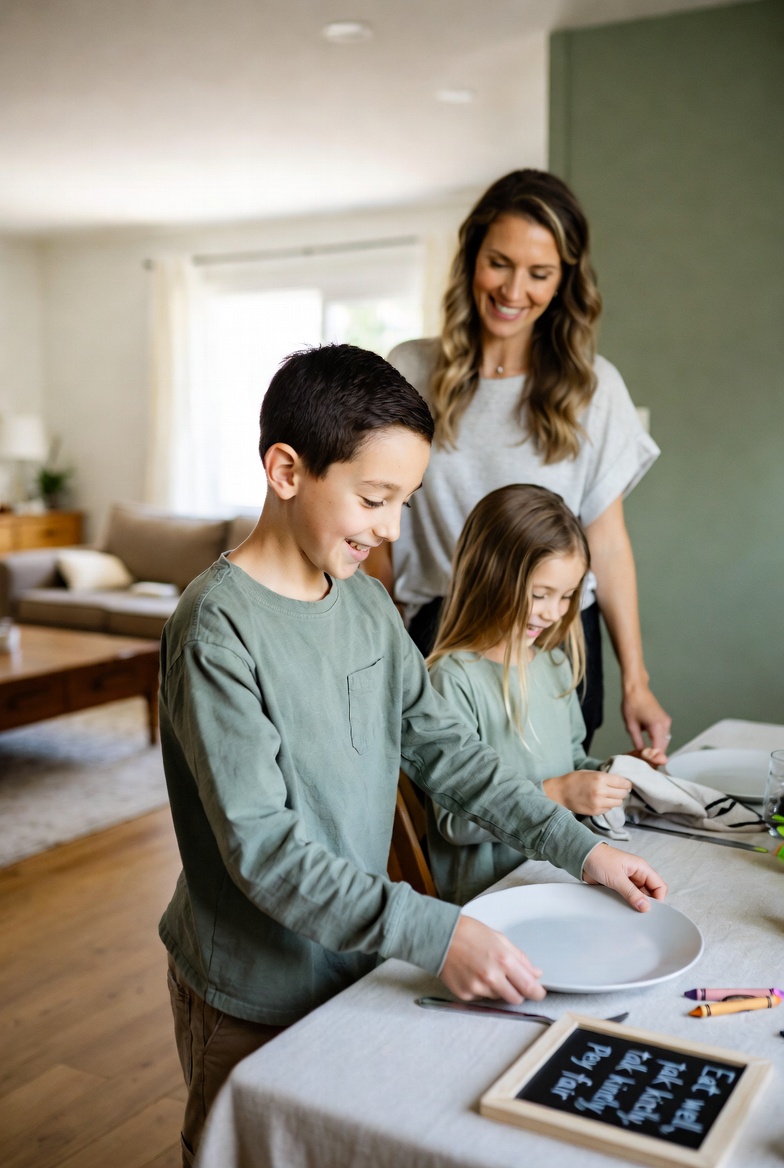
It’s easy to worry that if you’re not having constant “big talks,” your child might miss the chance to grow into leadership. The good news is that mindful leadership nurturing happens most reliably through simple rhythms, steady expectations, and motivational parenting messages that build trust over time. When these practices become part of family life, parental confidence building follows, and you’ll start noticing inspiring child growth in how they decide, contribute, and recover from mistakes. Leadership grows best in small moments practiced often. Choose one ritual to begin this week and keep it gentle and consistent. This is how long-term leadership development becomes a foundation for resilience, connection, and calm strength in the years ahead.
Article Contributed By Alyssa from millennial-parents.com. Check out this wonderful site!!
As an Amazon Associate I earn from qualifying purchases. These are genuine personal recommendations from my own practice.
My Sacred Tools
These are the cherished decks that guide my quiet time reflections. Each one brings unique wisdom—timeless archetypes, animal spirits, planetary herbs, and classic tarot symbolism. They’ve deepened my spiritual insights immensely, and I warmly recommend them if you're seeking gentle encouragement on your own path.
 The Rider Tarot Deck®: The Authentic Rider-Waite® Tarot Deck A timeless classic that grounds my readings in rich symbolism and tradition. Its imagery speaks clearly and profoundly every time. |
 The Wild Unknown Archetypes Deck and Guidebook This evocative deck dives deep into universal archetypes and shadow work. The artwork and guidebook inspire profound self-discovery. |


|
The Herbal Astrology Pocket Oracle A beautiful blend of plant medicine and planetary energies—perfect for nature-connected guidance. Compact and magical for daily draws. |
Medicine Cards: The Discovery of Power Through the Ways of Animals Animal wisdom at its finest. These cards teach power, healing, and lessons from the natural world with gentle, transformative insight. |
Get these books for free on Kindle Unlimited:
 Grandma's Recipes Go Gluten-Free "I am eating the Cranberry Muffins as I type this. YUM!! I used Organic Cranberry Sauce and Camino Muscovado Brown Sugar. Absolutely Delish! Looking forward to trying more of the recipes!" Amazon review |
 i am a good girl, i don't know why, i just am "This is a sweet short read of self affirmation and unconditional love and appreciation for the human spirit brought to this planet in the form of a perfect undeniably good little girl." Amazon review |
back to top of page
Site updated June 30, 2026
All information herein is provided for information and educational purposes only and is not intended to diagnose, treat, cure, mitigate, or prevent any disease or mental illness. No action should be taken based solely on what you find here; consult appropriate health professionals. The statements on this website have not been evaluated by the FDA and are not those of a licensed medical care provider.
Additionally, the ideas and strategies found on this website should never be used without first assessing your own personal and financial situation, or without consulting a professional. Any action you take upon the information on this website is strictly at your own risk. None of the contributors, authors, anyone else connected with metaphysical-mom.com can be responsible for your use of the information contained in or linked from these web pages.
Copyright

2026 Metaphysical-Mom.com